
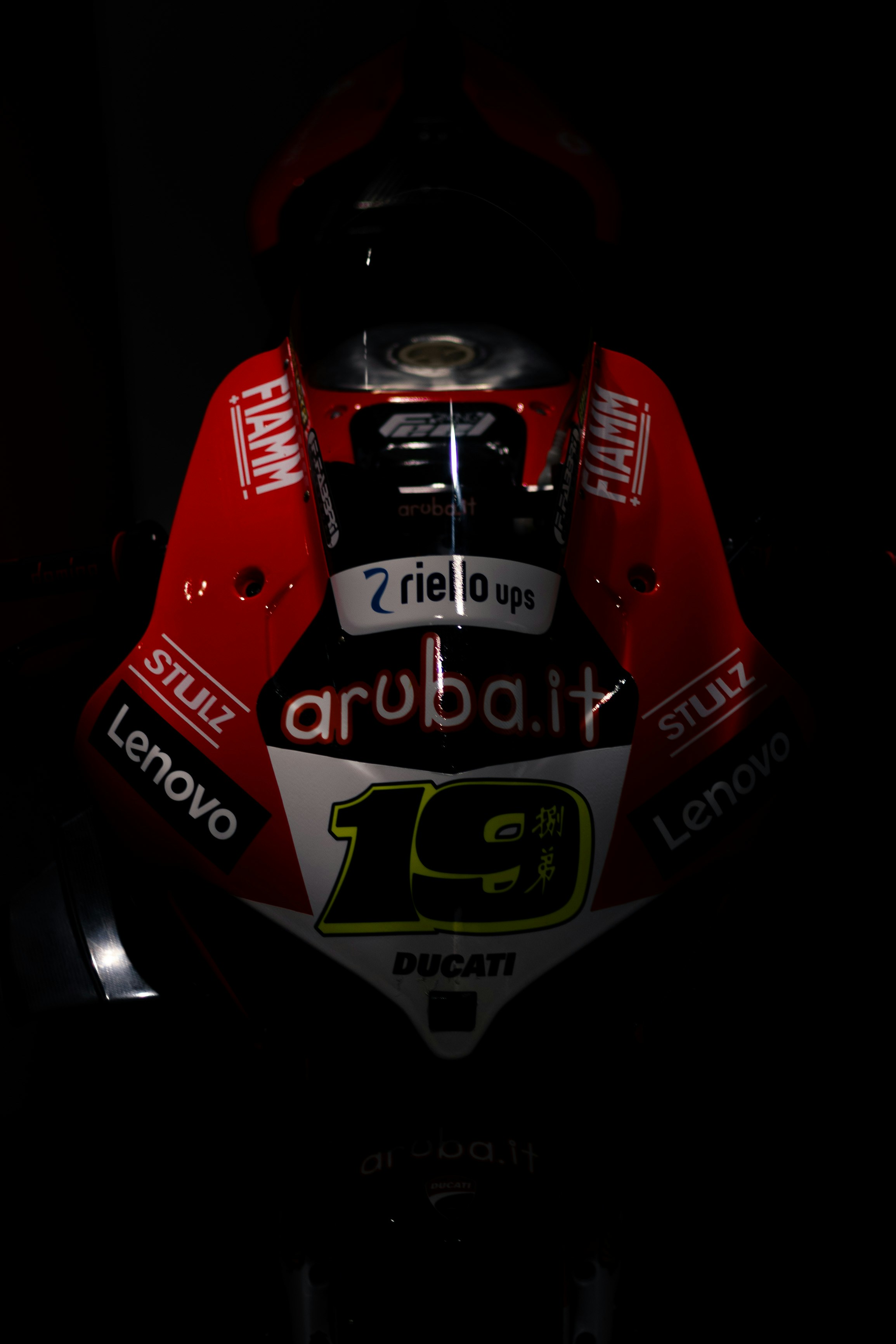
Nicolo Bulega entered the 2024 FIM Superbike World Championship with considerable momentum. The Aruba.it Racing–Ducati rider had just won the 2023 World Supersport title, establishing himself as one of the most compelling young talents in international motorcycle racing. His promotion to the premier production-bike series, however, represented a substantially greater challenge. WorldSBK demanded speed, consistency, technical understanding, and physical resilience across a more powerful and less forgiving motorcycle.
Bulega’s arrival was closely watched because he was stepping into a grid filled with established champions, experienced factory riders, and teams operating at the highest level of development. His Ducati Panigale V4 R was capable of winning, but equipment alone could not explain how quickly a rookie might adapt to the intensity of WorldSBK competition. Expectations were therefore shaped by both ambition and caution: preseason testing would offer the first meaningful indication of whether his success in World Supersport could translate to the larger stage.
Those early outings quickly suggested that Bulega’s transition would be more than a gradual learning exercise. He showed impressive pace while understanding how to exploit the Ducati’s strengths, particularly through smooth corner entry and confident braking. His ability to preserve tire performance over race distance also stood out, a crucial quality in a championship where late-race grip can determine the difference between a podium and an ordinary result. Rather than relying solely on outright aggression, he combined precision with a measured approach.
Just as important was his capacity to learn quickly. Bulega absorbed information from each session, refined his riding, and converted experience into increasingly competitive performances. The season’s central narrative began to take shape almost immediately: he was not simply adapting to WorldSBK, but challenging established names for victories. His debut consequently reshaped assumptions about what a rookie could achieve, turning a promising promotion into one of the championship’s defining stories.
Nicolo Bulega’s arrival in WorldSBK immediately altered expectations for the 2024 season. Rather than requiring a gradual adaptation period, the Aruba.it Racing–Ducati rider was competitive from his first qualifying sessions. At Phillip Island, he converted strong testing form into pole position and then won his opening race, an achievement that established him as more than a promising newcomer. His speed remained visible across the weekend, including the Superpole Race and the longer second encounter, where he continued to fight near the front against riders with considerably more experience.
Those results carried several layers of importance. The individual records belonged to specific achievements—pole position, an opening-race victory, and early podium finishes—while the wider rookie milestone was the consistency with which Bulega accumulated front-running results. He was not simply benefiting from one favorable circuit or an isolated mistake by a rival. His qualifying pace, race starts, and ability to remain effective over full distances placed him among the fastest debutants of the modern WorldSBK era, without requiring exaggerated comparisons or unsupported statistical claims.
The technical foundation of the breakthrough was equally significant. Bulega extracted strong acceleration and top-end performance from Ducati’s powerful V4 R engine, while using a precise riding style to generate speed without exhausting the tires prematurely. In qualifying, he maximized a single flying lap and adapted quickly to changing grip levels. During races, he managed tire performance with notable discipline, preserving enough traction for the closing stages rather than relying solely on early pace. His responses to pressure from established rivals were measured, helping him avoid the errors often associated with a first season at this level.
For Aruba.it Racing–Ducati, that start created immediate momentum and transformed Bulega from a developmental prospect into a serious championship presence. Each podium and victory increased the team’s strategic options, strengthened its confidence in the new pairing, and made the rookie’s progress one of the defining stories of the campaign.
Bulega’s breakthrough season was shaped by sustained competition rather than headline results alone. As a WorldSBK rookie, he immediately found himself dueling with experienced riders such as Álvaro Bautista, Toprak Razgatlıoğlu, Jonathan Rea, and other established specialists. Those confrontations demanded more than outright speed. Bulega had to judge the opening lap carefully, protect his position through the first braking zone, and choose when an overtake was worth the risk. Riders with greater premier-class experience could apply pressure without appearing to attack, forcing him to manage his pace, defend efficiently, and preserve his tires for the closing laps.
The structure of a WorldSBK weekend added another layer of difficulty. Superpole rewarded a precise single lap and determined the starting position, while Race 1 required conventional long-distance management. The shorter Superpole Race encouraged immediate aggression, yet it also influenced grid position and confidence for Race 2, the weekend’s final and often most tactical contest. Starts, braking distances, tire degradation, and changing grip therefore had to be reconsidered repeatedly. A setup that worked over one lap could compromise tire life, while a choice suited to a hot afternoon might become less effective when temperatures or track conditions changed. Maintaining concentration across several races, travel demands, and a long calendar was a test in itself.
Not every weekend offered a straightforward path to the podium. Difficult sessions, small mistakes, and the occasional loss of momentum exposed the limitations that accompany a first full campaign at this level. Bulega’s response was important: rather than relying solely on confidence, he and the Aruba.it Racing–Ducati team used data comparisons, rider feedback, and setup changes to refine electronics, braking stability, acceleration, and tire management. Ducati’s engineering support helped connect those adjustments with the Panigale V4 R’s strengths, while the team’s analysis turned lessons from one race into preparation for the next. His results consequently reflected adaptability and decision-making as much as natural pace. Bulega emerged not simply as a fast newcomer, but as a complete racer capable of learning under tactical pressure and converting changing circumstances into competitive opportunities.
Nicolo Bulega’s 2024 WorldSBK campaign should be measured through its results rather than its novelty. In his rookie season, he finished second in the riders’ championship with 365 points, behind Toprak Razgatlioglu and ahead of reigning champion Alvaro Bautista. He recorded six race victories, 14 podium finishes and three pole positions, while also earning the championship’s official Rookie of the Year distinction. Those figures establish a substantial achievement, particularly because they were delivered across a full season against experienced riders, varied circuits and changing technical demands. They also provide a clearer basis for assessing his breakthrough than broader claims about an immediate transformation of the championship.
The season materially strengthened Bulega’s position within Ducati. His speed, qualifying performances and ability to fight at the front confirmed that he is more than a promising graduate of the WorldSSP category; he is now a credible future title contender. Expectations will consequently be higher in subsequent seasons. To convert this platform into a championship challenge, he must improve consistency at every circuit, manage the pressure associated with leading or defending a points advantage, and turn strong early-season form into sustained performance. Continued development of his technical feedback will also be important as Ducati refines the Panigale V4 R and rivals respond to his strengths.
Bulega’s emergence further demonstrates the value of the WorldSSP-to-WorldSBK pathway when a talented rider receives competitive machinery, structured factory support and time to adapt. It also adds another central figure to a changing rivalry landscape, alongside established champions and other younger contenders. His debut should therefore be remembered neither as an isolated surprise nor as proof that a title is inevitable. It was the opening chapter of a potential championship-winning career, one whose next stage will depend on repeatability, strategic maturity and continued technical growth. If those elements develop, Bulega can become one of Ducati’s defining riders of the next WorldSBK era.